Magic mushroom retreats in Jamaica: what to know
A “magic mushroom retreat” and a psilocybin retreat are the same thing — magic mushrooms contain psilocybin. Here is what that means, and how to tell a clinical program from mushroom tourism.
If you have been searching for a “magic mushroom retreat” or a “mushroom retreat in Jamaica,” it helps to know that these terms describe the same thing clinicians call a psilocybin retreat. Magic mushrooms — sometimes called psilocybin mushrooms or shrooms — contain psilocybin, the naturally occurring compound that produces the psychedelic experience. So a magic mushroom retreat, a psilocybin retreat, and psilocybin-assisted therapy all refer to the same underlying medicine, described in different words.
What actually varies is not the mushroom but the model of care around it. This guide explains the terminology, why Jamaica has become the world’s leading destination for legal mushroom retreats, and — most importantly — how to tell a genuine clinical program apart from mushroom tourism before you book.
Magic mushroom retreat, psilocybin retreat — what’s the difference?
There is no clinical difference. “Magic mushrooms,” “psilocybin mushrooms,” and “shrooms” are everyday names for fungi that contain psilocybin. When people search for a magic mushroom retreat, they are almost always looking for the same experience a clinic would call a psilocybin retreat or psilocybin-assisted therapy: a supported psychedelic session inside a structured therapeutic process.
The words matter less than what stands behind them. A retreat can advertise “magic mushrooms” and still be built on rigorous clinical care — or it can use clinical-sounding language and offer very little. At Afterlight, whichever term brought you here, the substance is the same and so is the standard: psilocybin delivered legally in Jamaica with full clinical oversight.
Why Jamaica for a mushroom retreat?
Jamaica is one of the few places in the world where psilocybin has never been prohibited — magic mushrooms were never scheduled under the country’s Dangerous Drugs Act. That legal openness is why a real ecosystem of mushroom retreats, cultivation, and psychedelic research has been able to develop here in the open, rather than underground.
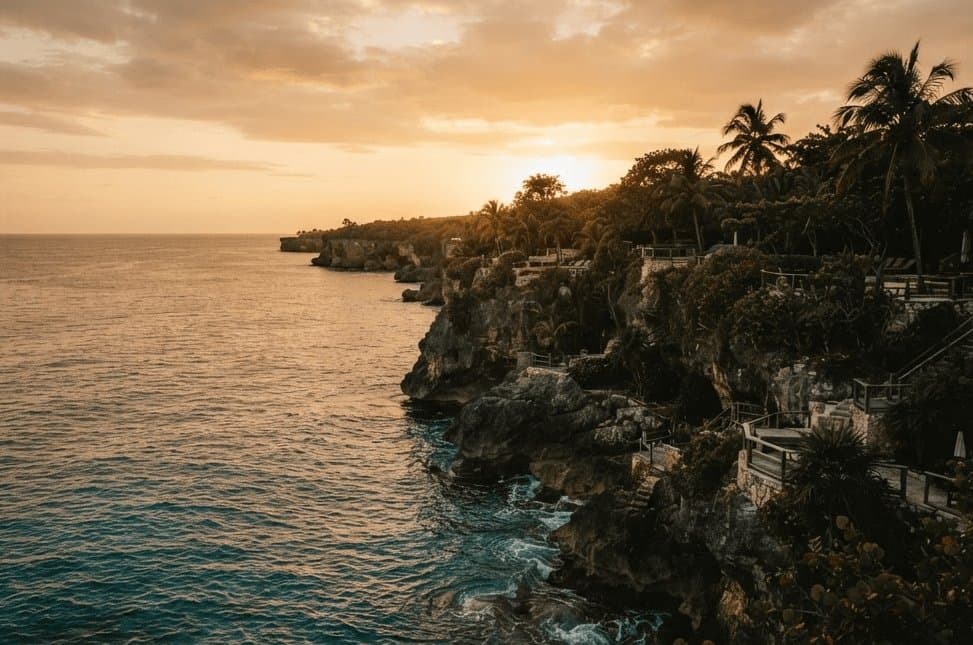
For you, that means a magic mushroom retreat in Jamaica can operate transparently: with named clinicians, proper screening, and integration support, instead of the secrecy that surrounds this work in countries where it remains illegal. Afterlight is based on the West End cliffs of Negril, where the legal setting and the restorative environment come together.
The difference between a clinical retreat and mushroom tourism
Because the island is popular, “magic mushroom retreat Jamaica” returns everything from serious clinical programs to casual wellness experiences that hand out mushrooms with little screening and no follow-up. The single biggest decision you make is not the villa or the price — it is which kind of program you are actually booking.
A clinical mushroom retreat is led by qualified clinicians, requires medical and psychological screening before you are accepted, supports you one-to-one during the session, and includes structured integration afterwards. Mushroom tourism tends to skip most of that. If a retreat will book you without any clinical intake, treat it as a warning sign rather than a convenience.
Is a magic mushroom retreat safe?
When delivered in a legal setting with clinical oversight, psilocybin is considered safe for most people who pass screening. The safety does not come from the mushroom itself but from the structure around it: medical and psychological screening, trained supervision throughout the session, a controlled private setting, and integration support afterwards.
Psilocybin is not suitable for everyone. A personal or family history of psychosis, certain cardiac conditions, and some medications are genuine contraindications, which is why no responsible mushroom retreat accepts a participant without proper screening. At Afterlight, every program is designed and overseen by PhD-level psychologists.
What to ask before you book a mushroom retreat
Who is running it — qualified clinicians, or facilitators who added mushrooms to a wellness offering? Is there genuine medical and psychological screening before acceptance? Is structured integration included, and who delivers it after you fly home? Is the setting private, controlled, and calm? And are they honest with you about what psilocybin can and cannot do?
A trustworthy magic mushroom retreat treats you as a person to be screened, prepared, guided, and supported — not a booking to be filled. That is the line between mushroom tourism and clinical psilocybin-assisted therapy, and it is the one thing worth being uncompromising about.
Common questions
Is a magic mushroom retreat the same as a psilocybin retreat?
Yes. Magic mushrooms (also called psilocybin mushrooms or shrooms) contain psilocybin, so a magic mushroom retreat, a psilocybin retreat, and psilocybin-assisted therapy all describe the same medicine and experience. The meaningful difference is the model of care — screening, clinical supervision, and integration — not the terminology. Afterlight delivers this as a clinical program in Jamaica, where psilocybin is legal.
Are magic mushroom retreats legal in Jamaica?
Yes. Psilocybin has never been scheduled under Jamaica’s Dangerous Drugs Act, which is why magic mushroom retreats can operate openly and legally there. This legal status is the reason Jamaica has become a leading destination for clinical psilocybin-assisted therapy delivered with full clinical oversight, screening, and integration support.